Płock attractions and interesting places to see in the city on the Vistula!
The Old Town of Płock is not large, almost all beautiful monuments are located along the banks of the Vistula River, close to each other
There is a paid parking zone in Płock, but you will park for free on theweekend
You will find a lot of restaurants here, most of them on Grodzka Street between two main squares
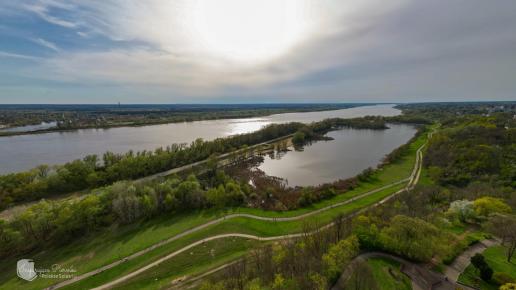
Be sure to stroll along the river promenade and pier, you will see a nice sunset from here, and the views are even better when you climb the stairs to the top of the slope
Enter the Gothic cathedral on the Tumski Hill, where a copy of the famous Płock door and the sarcophagus of the 2 rulers of Poland are waiting
It is worth visiting the modern Mazovian Museum, at the Art Deco exhibition there is an impressive red car - Jowett (normal ticket PLN 20)
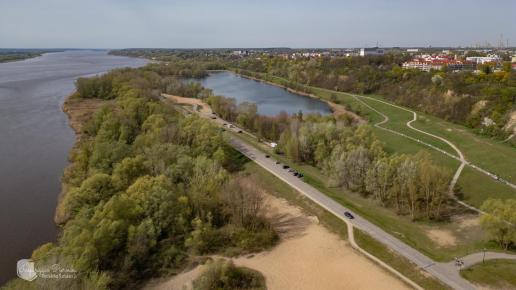
How is it possible that Płock is so unpopular with tourists, if it is such a beautiful city? Just look! Did you know that Płock was once the capital of Poland? And as many as two Polish rulers were buried here? It is a beautiful city in the Mazowieckie Voivodeship with a long history and many impressive monuments. Beautifully located on the Vistula River spreading widely here. On its high escarpment, thanks to which you can admire wonderful and extensive panoramas, especially captivating at sunset.
Attractions in Płock or what to see in Płock?
Attractions of the city and interesting places in Płock attract many tourists here. It is enough to look at the Vistula River on a warm weekend to find out. The entire Old Town was extremely picturesque on this river, very nicely and ingeniously developed. But it is also worth seeing fascinating and valuable monuments in Płock, creating compact buildings. Impressive! Check out the best attractions of Płock, gathered in this city guide!
Tumskie Hill and the cathedral in Płock, or what is Płock known for?
At the pedestrian street there is a magnificent building, originally Romanesque, from 1144, founded by Bishop Alexander of Malonne. It is the Cathedral Asylum of the Assumption of the Blessed Virgin Mary. The most valuable monument of the city and one of the five oldest cathedrals in Poland. It rises 60 meters above the queen of Polish rivers, on the Tumski Hill.
This place can be visited free of charge. The interior impresses, and in addition it is the burial place of the rulers of Poland. At the back of the temple, in the Royal Chapel, there is a sarcophagus of the rulers of Poland: Władysław Herman and Bolesław Krzywousty. Next to it, in the porch you can admire a copy of the famous Płock Door. They are older than the famous Gniezno Door. More specifically, the original is older, because currently a 20th-century copy is visible in Płock. Cast in the 12th century, the wings are now located in Novgorod Wielki, Russia. It is not known when they got there or whether it was a theft or a gift. From the inside of the basilica, you cannot see the decorations on the door, because you enter the church through the side entrance. You have to open the door yourself. Address: Wzgórze Tumskie, ul. Tumska
Płock Castle, the current Diocesan Museum
A castle of Mazovian dukes was built next to the cathedral in the fourteenth century, but it did not survive the test of time. Only 2 towers remained of it - the Nobility Tower and the Clock Tower. In the 16th century, the building was rebuilt into a Benedictine abbey. Today, the Diocesan Museum is located within its walls. It is a place full of history and art, not only sacred, but mainly. It made a colossal impression on us, because the exhibits are noble. The Płock Bible is the most valuable here. It is a manuscript written on parchment and illustrated in the Romanesque style. The Bible comes from the first half of the 12th century and contains books of Scripture with commentaries and liturgical notes. In addition, it hides the oldest records of miracles performed in the Płock cathedral in Poland. The first is the healing of the paralyzed girl Wojucha, the second is the rescue of the reliquary, which was an ostrich egg containing the remains of saints. It was suspended from the ceiling of the cathedral, but one time the chain simply broke and Zacharias miraculously ran up in time and saved them from falling.
We were also delighted by the beautiful herma of St. Sigismund. It is also a reliquary, donated to the cathedral by King Casimir the Great. He is crowned with the Płock tiara, which dates back to the 13th century. This is a beautiful and valuable "crown", made of gilded silver, decorated with rubies, sapphires or pearls. A real work of art. Address: ul. Tumska
Płock Pier
Numerous routes were built on the waterfront, as well as an attractive footbridge over the river. Unique because it does not go perpendicularly above the water, but runs parallel along the shore. At the end of the pier in Płock, there is the Molo Cafe. Pleasant city beaches have been created nearby. Address: Nabrzeże Stanisława Górnickiego St.
Promenade on the Vistula in Płock
The promenade runs practically along the entire Old Town by the river. A place for walks, meetings and fun for residents and tourists. It's amazing how nicely landscaped this area is, attractive for people of all ages. There is, among others, a small playground, benches, restaurant, pier, cafe. On warm weekends, a lot of people enjoy the sun here, until the late hours, when it hides in the sun. Address: Nabrzeże Stanisława Górnickiego St.
Amphitheatre in Płock
The amphitheater is a modern building with a fan roof that grew over the river, between the promenade and the Old Town. In spring and summer, interesting outdoor events take place here, including the Płock Cabaret Night. You will usually come across it in the first week of May, and there are creators from all over Poland. Address: Rybaki
Beaches on the Vistula in Płock
Behind the pier, towards the old rectory by the river itself, there are large expanses of sand that attract holidaymakers on warm days. It is a pleasant place for recreation, overlooking the high shore of Płock, with a clear cathedral hill, i.e. Tumski. Address: Rybaki
Mazovian Museum in Płock
The Mazovian Museum in Płock is the oldest Polish museum. At least publicly. It was established in 1821 by the decision of the authorities of the Kingdom of Poland. Unfortunately, it did not survive the test of time and was closed after 15 years. It was brought back to life in 1907. Today, it is a modern and extremely rich in collections, exhibits and works of art museum, consisting of several Branches. 3 of them are located in the very center of the city, further interesting exhibitions can be found in the fourth branch of the Mazovian museum - granary on the slope above the Vistula. In addition, the facility includes the Museum of Mazovian Jews about Jews in Mazovia (located at 7 Józefa Kwiatka Street, in the former synagogue, the so-called Little Synagogue) or a small open-air museum. In total, the Museum presents over 85,000 exhibits!
Art Deco
The Płock Art Deco Exhibition is the largest, if not the only exhibition of this type in Poland. It depicts the extremely colorful 1920s. In a central place stands a beautiful red Jowett car. The exhibition in the main place puts a woman who at that time began to exercise her rights! Address: 6 Kolegialna Street
Secession
In the Art Nouveau tenement house, which is only 100 meters away, there is the main branch of the museum. The building has as many as 4 floors and hides many benefits. Secession welcomes us with sculptures by Bolesław Biegas are not only beautiful, but also extremely poignant, and his imagination is impressive. On the first two levels you will find interesting arrangements of middle-class, bourgeois houses from the turn of the 19th and 20th centuries. In practice, it is a walk through two apartments, in times of great changes in art and society. Address: ul. Tumska 8
10th century Płock
We were most captivated by this Branch, talking about the long history of the city. The whole millennium is presented here at exhibitions. The star is a model of the city, depicting it from the 18th century. It is 40 square meters and extremely accurate. The reader talks about it, and the individual fragments are then highlighted. In this branch you will also learn about the times of the Polish nobility, partitions and later. There are also elements of Jewish culture. The exhibitions are modern, with multimedia elements and interestingly arranged. They attract attention and invite you to explore topics. Address: ul. Tumska 8
Granary in Płock
The historic granary is very picturesquely located behind the parsonage, above the river. We were very impressed by the exhibition of Far Eastern Art "Płock Treasures of Buddhist Asia". It was nice to experience these climates, because Asian destinations are foreign to us so far. On the second floor, you will see an ethnographic exhibition and realize how diverse the culture of the entire Mazovia region was. It might seem that the traditions and outfits of the region will be almost identical. Each step shows us how much people want to stand out and create their own identity. Fit into your own micro-region. Address: Kazimierza Wielkiego 11B
Old Market Square and Town Hall in Płock
Today, the extensive Old Market Square is a more secluded place than the waterfront. The decoration here is the magnificent Town Hall - a classicist building from the 19th century. Interestingly, it absorbed two neighboring tenement houses, creating one vast lump. It was here that the last Sejm of the Kingdom of Poland took place, when the days of the November Uprising were already numbered. At the square and around it there are historic tenement houses from the 18th and 19th centuries.
The rectory in Płock
The Płock rectory is the collegiate church of St. Bartholomew. This oldest parish church in the city is also one of its most valuable monuments. It was founded by King Casimir the Great himself and has been operating continuously since 1356.
Today, after the reconstruction, the rectory has not retained its Gothic character or decor. Interestingly, in one of the side altars of the church there is an image of Our Lady of Perpetual Help, which was founded by the founder of the Old Catholic Mariavite Church – Maria Franciszka Kozłowska. Address: ul. Kazimierza Wielkiego 1
Monument to Wrymouth in Płock
Next to the old rectory, Bolesław Krzywousty looks at the waterfront and beaching tourists. The same one who began the division of the district in his will. The stately monument stands on a square from which a beautiful panorama unfolds, especially during sunset. Address: Kazimierza Wielkiego Street
Sobótka Lagoon in Płock
In addition to the beach by the river, there is also a beach and a swimming pool next to the small Sobótka Lagoon, in the very center of the city. This is the old Vistula river, and today it is a small lake. The water is clear and the beach is sandy. There is a playground for beach soccer, a slide for children, as well as a canoe and pedal boat rental. There are cycling and walking paths around. Do you need something more to make it a favorite place for walking, cycling and training runners? In winter, the Płock Walruses appear here. Address: Rybaki
Płock
Zoo, or Zoological Garden. What to do with a child in Płock?
Płock Zoois a nice family attraction. We came to Płock with our youngest daughter, which is why we willingly visited a nicely located park with numerous animals. It is not large, but it may be better, because animals are more willing to approach visitors, which increases the fun of the youngest. Here you will meet the world's most interesting species, such as lions, tigers, giraffes, elephants and zebras. The mane wolf aroused interest, which tourists compared to a fox or a hyena. In fact, he looked the least like a typical wolf.
There are also aquariums and terrariums as well as a swimming pool with seals. And to this place of fun for children, like ZooLandia, a rope village (separately paid), a playground or a mini zoo with goats, ponies, chickens and bunnies. You can enter the goat pen, pet it or feed it with hay. Interestingly, there are plans to expand and modernize the zoo, which are presented on the boards. It looks very interesting. Address: ul. Norbertańska 2 http://www.zoo.plock.pl/
Old Catholic Mariavite Church in Płock, or the Temple of Mercy and Love
The Mariavicka Cathedral was built on the initiative of Maria Franciszka Kozłowska, in the years 1911-14. There is also a monastery here, which is the seat of the authorities of the Mariavite Church. The impressive complex represents the English neo-Gothic style and is available to tourists free of charge. You can enter the church grounds, and the temple itself can be admired through the grille.
Mariavitism is the only Christian confession created in Poland. In the wake of the apparitions of the nun Maria Franciszka Kozłowska, still within the Roman Catholic Church, a community was established in Płock, which in 1906 was excommunicated by Pope Pius X. It operates to this day as an independent entity from the papacy. It is estimated that today this faith is professed by 25,000 Poles and 20,000 French people, although believers can be found all over the world. Their bishop has his seat in Płock. Address: Kazimierza Wielkiego Street
The Shrine of Divine Mercy in Płock
The sanctuary is the destination of numerous pilgrimages. It was here, on February 22, 1931, that Sister Faustina Kowalska, canonized by Pope St. John Paul II, had the first apparition of the image of Merciful Jesus. On the 100th anniversary of the birth of this Saint, the Museum of St. Faustina was opened here. Address: Stary Rynek/Piekarska Street
Piłsudski Legions Bridge in Płock
Walking along the Płock promenade, you will immediately notice a huge bridge, thrown over the very wide Vistula River in this place. This object looks particularly impressive after sunset, as it is nicely illuminated. It is an iron road-rail bridge, supported on 8 concrete pillars. The Kutno - Brodnica railway line runs through here. The bridge was built in 1937-38. In September 1939, the Polish army blew up 2 spans, and in 1943 the occupying German authorities rebuilt the bridge. Unfortunately, in January 1945, during their escape, they blew up 60%. Until the bridge was rebuilt, that is for 5 years, an interesting crossing system was organized here using ships, pontoons and boats. Address: ul. Mostowa
Open-air museum in Sierpc
Among the tourist attractions of the Płock area, the Museum of the Mazovian Countryside in Sierpc is particularly worth recommending, created mainly by the climatic open-air museum located outside the city. It is probably the most cinematic ethnographic park in Poland, but the real star here is the koźlak windmill, still running. You will see its spinning smigs in the Open Air Museum every Sunday during the tourist season. Attention is also drawn to the beautiful ultramarine huts. It is a specific blue dye, perfectly suited to the open-air museum scenery. Address: ul. Gabriela Narutowicza 64, Sierpc
Our video
We invite you to watch our video from this beautiful city.
Map of attractions in Płock
To make it easier for you to plan your visit to Płock, we have marked on the map attractions that are worth visiting. We reached many of them during our weekend trip to this fascinating city.
Map of paid parking in Płock
Paid parking lots in the city are marked on the map. Paid parking Mon-Fri 8.00-17.00 Prices: from PLN 2 per hour
Where to eat, i.e. restaurants in Płock?
If you want to eat well and not pay a fortune for food, it is worth checking the rating first and reading the reviews on Google. We always do that. Observing the locals is also a good way. This is how we got to Vege Street Food Krzaki (Gabriel Narutowicz Square 1) at the end of our visit. The restaurant with an outdoor terrace was full every time we passed by. Fashionable, pleasant, not very expensive. As the name suggests, you won't eat meat here, but we enjoyed it here anyway. It's worth a visit.
The Tumski Brewery in the Old Market Square is also worth recommending and noting. It is an atmospheric restaurant, where they have been brewing their own craft beer in various species since 2008.
The beautifully located Molo Cafe by the water invites you for a cup of coffee. At the Mazovian Museum, you will relax and experience sweets in the Sweet Corner Confectionery.
Where to sleep, i.e. accommodation in Płock
We slept in Płock in the Rybaki Inn. The location of this place is very good, because it is almost by the river, by the promenade, close to the very center, where you can walk without any problems. It is true that on Saturday evening it was a bit loud outside the window. The accommodation is not expensive and offers breakfast included in the price. In fact, there are so many advantages of the place. The inn's best years are behind it. Our room definitely needed refreshing, especially the bathroom, which deviated from today's standards. Also, if you want to spend the night economically, you can think about this place, but I would rather not choose it a second time.
Here you will find a wide selection of accommodations. By booking your stay on Booking.com through our link, you support the development of our blog — and we thank you in advance! It helps us reach many interesting places that we later love to show you and share our experiences and information with you.
History of Płock
Located between Warsaw and Włocławek, Płock is one of the oldest Polish cities. The testimony of its thousand-year history are numerous monuments preserved here, which Płock can really boast of. The city was founded during the formation of Poland. The first castle stood on the Tumski Hill, towering on the high bank of the queen of rivers.
Płock was especially loved by Polish princes: Władysław Herman and B. Krzywousty. During their reign, there was already a bishopric here, which is why Herman moved his court here from Krakow and thus Płock became the capital of the state for the next 60 years. The remains of both rulers rest in the cathedral today. This is the resting place of many Mazovian princes.
In the times of Mieszko II, there was a pagan reaction that ravaged the country. The king's Cześnik, Miecław, rebelled and declared himself a ruler independent of the Piasts. He even started to mint his own coin. However, his state, which included Mazovia and part of Wielkopolska, did not last long. He was defeated by Kazimierz the Restorer returning to the country, and so ended his dreams of his own country, which existed only in the years 1037–1047.
You will get to know the history of the city well at the Mazovian Museum, especially at the exhibition of the 10th century of Płock. Today, it is a very well-kept city, beautifully developed. It is definitely worth taking a look here, while in Mazovia, and visiting a number of monuments in Płock. Especially since the attractions in the area are also interesting.
Access to Płock
You can get to the city comfortably by car or train:
by car from the south of Poland, you will quickly reach the A1 route, and then the road No. 60 to Płock itself
by train of the Mazovian Railways, you can comfortably get directly from Warsaw. This trip will take 2 hours. It is a 2-kilometre walk from the station to the Old Town. You can use public transport, although it will temporarily go out a little less than a walk
Rent a car
Exploring becomes much easier when you have your own means of transport. You don’t have to worry about buses or taxis, and you can plan each day your way. The search box below will help you find the right car – right where your journey begins.
What's worth seeing in the area?
If you have already visited this attraction, it is also worth visiting several other interesting ones places nearby. Within a radius of 100 kilometers you will find many interesting places places that can diversify your stay in this part of Poland.
Hi! My name is Anna Piernikarczyk. We have been blogging and wandering around Poland since 2005. We bring back a lot of wonderful memories and experiences from family trips, which I am happy to share with you. Today it is more than just a passion, Our mission is to debunk the myth "You praise other people's things, but you don't know your own"!
Polskie Szlaki - Inspiring Pierniki Copyright 2005-2026